
Tile, clay and steel
Tile and Metal Roof Moss Removal Around Parksville
Tile and steel roofs outlast the moss on them. The small parts do not: laps, screw washers, ridge caps and paint. That is where our time on these roofs goes.
Customer reviews
What customers say
Great experience working with this company! Quick turn around time and very professional. I’ll definitely be using their services again in the future.
Great job and fair pricing! Will hire again!
The service provided by the owners of the company and the staff were beyond exceptional. The price was also very exceptable and affordable.
Why us
Why customers love our service
And why you will get the best moss removal service in Parksville!
Fast and efficient moss removal
We arrive on the agreed day, finish every slope we quoted for, and leave the yard as tidy as we found it.
Clear and quick communication
Calls and texts get answered, the price is settled before work begins, and afterwards we tell you how the roof looked.
Five-star reviews
Homeowners rate our crew five stars, review after review.
Clearing moss since 2021
Five years on Oceanside roofs of every kind: asphalt, cedar, tile and metal, plus the paving beneath them.
- A look from the ground and the ladder to plan a route before we step on
- Moss lifted by hand from tile pans, laps and the joints between courses
- Steel ribs, panel overlaps and each row of exposed screws brushed out
- Needle mats pulled from valleys, ridge caps and the high side of chimneys
- Lichen treated in place so it lets go without taking paint with it
- A list of cracked tiles, backed-out screws and tired washers we noticed
Before and after
One roof, before and after
Both photos in a set come from the same position, taken as we arrive and again once the moss and debris have been cleared away.
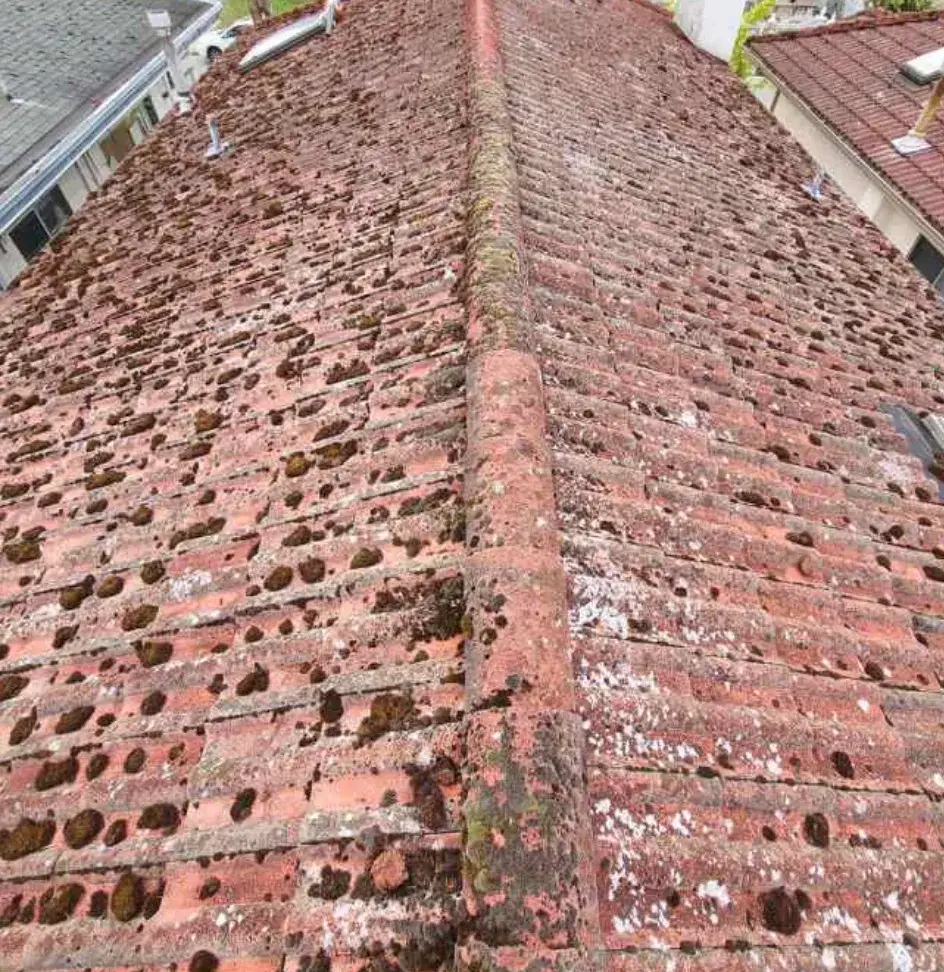
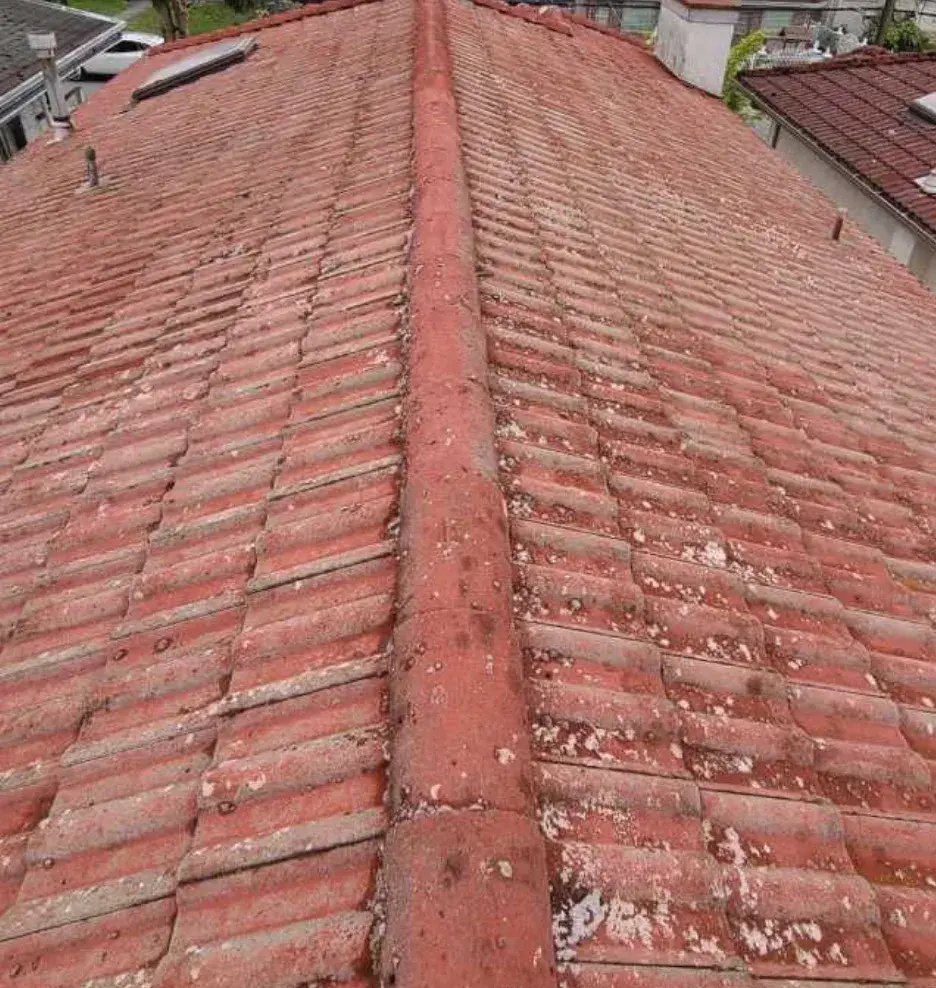
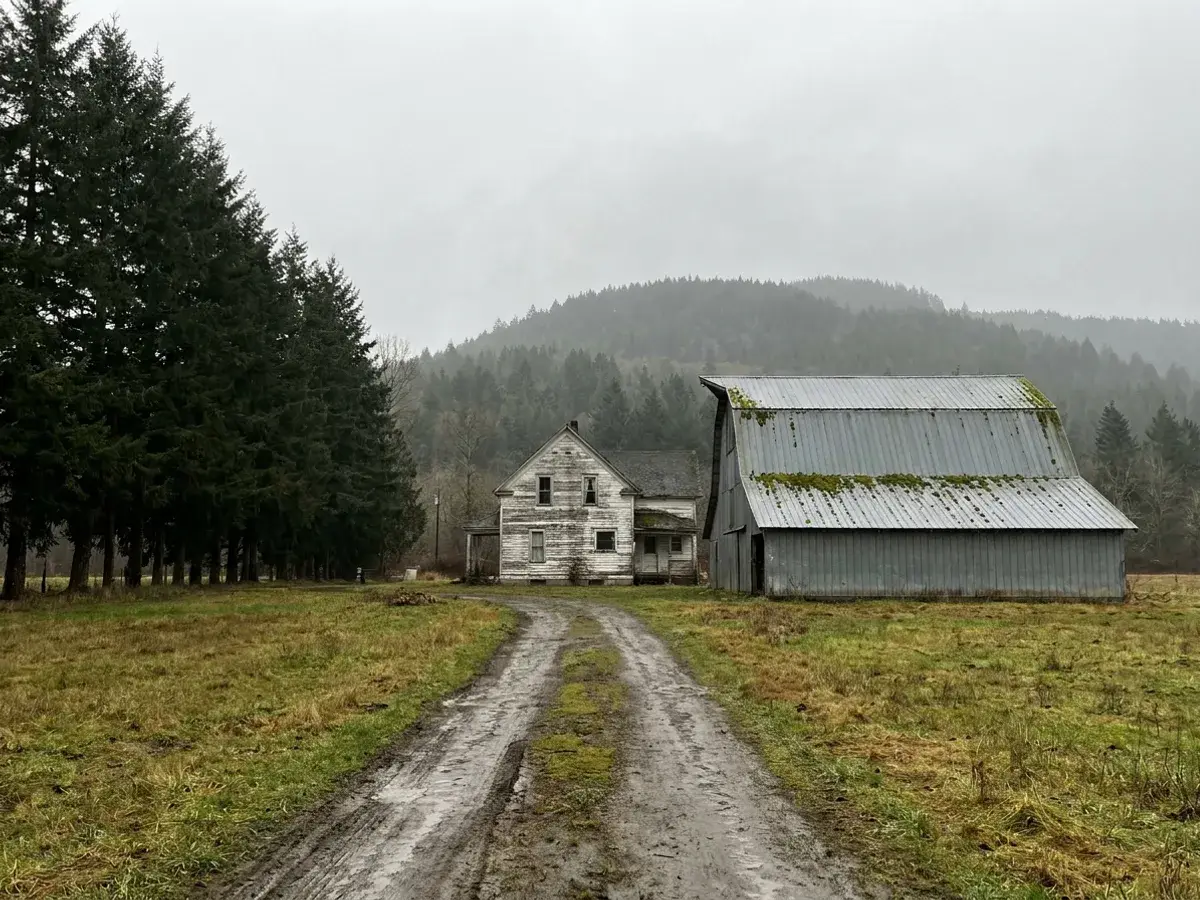
Tile and steel are built to last a long time, and on most of these roofs the covering will outlive several rounds of moss. What wears out sooner are the small parts: the rubber washers under screw heads, the overlaps between courses of tile or sheets of steel, the paint on a steel sheet, and the flashings that collect needles. Our job on these roofs is to get the moss off without hurting any of those. Around Parksville we see steel most often on rural buildings, especially the shops, barns and carports on acreages out toward Hilliers, where tall trees keep the panels shaded and damp for much of the winter. Tile turns up on houses scattered through the area.
We read the roof before we touch it
The first part of any visit happens from the ground and the top of a ladder. We want to know three things: what the roof is made of, what is growing on it, and where it is growing.
Material decides how we move. Steel can be walked once it is dry, keeping to the fastened strips over the framing. Concrete tile can take a boot in some places and not others. Clay tile takes very little weight at all.
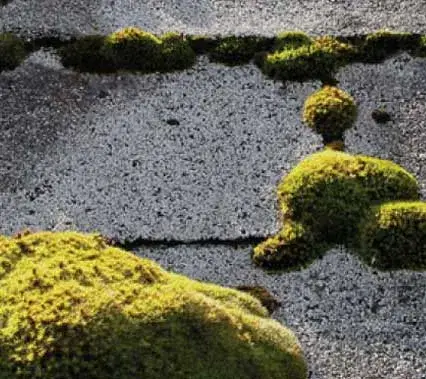
What is growing decides how it comes off. Soft green cushions are moss, and they lift away by hand. Flat, crusty patches in grey, green or yellow are lichen, and lichen is treated, not scraped. On an open roof facing the water, some of what looks like moss from the driveway can turn out to be lichen once we are up close.
Where it is growing tells us where the risk is. Moss spread across the open face of a tile is mostly cosmetic. Moss packed into a lap, a valley or a row of screws is holding water exactly where the roof needs to drain.
Steel roofs: follow the fasteners
Rain runs off a steel panel too quickly for moss to settle on the flat. So on steel we look at the places where water stalls. On screw-down panels that means the rows of exposed screws, where needles catch against each head and moss grows into the gap. It also means the horizontal overlaps between sheets, the ridge cap, and the high side of every vent, chimney and skylight, where debris builds up against the obstruction.
We clear those lines with soft brushes and plastic tools, working downhill. A metal scraper would cut the coating, and bare steel under a scratch is where rust begins. While we are there we look at the screws. A washer that has gone hard and cracked, or a screw that has backed out, goes on the list we give you.
We only climb onto steel once it is dry. A damp panel with moss on it is slippery underfoot, and the dry spell between late spring and early fall is when most of this work gets booked.
Concrete and clay tile: where the weight goes
Concrete tile weathers. Once the factory surface wears off, the tile holds moisture in its face, and moss roots into it. The moss on the face is not the main concern. The concern is the moss in the pans and laps, which are the channels the roof drains through.
Every step on a tile roof goes where that tile is supported from below, near its lower edge where it bears on the course under it. The middle of a tile, spanning open air, is where cracks start. On clay, which is harder and more brittle than concrete, we keep footsteps to a minimum and do as much as possible from ladders.
How it works
How Booking Your Roof Works
Four steps, and only the first one needs anything from you. Describe the roof, approve the price, and stay on solid ground while we work.
Describe the roof
Two minutes on the phone or the form.
The address, how many storeys, the roofing material if you know it, and roughly how green it looks from the yard. Mention any big trees nearby.
Approve the price
Every quote is worked out for one roof.
Steepness, height, material, the depth of the moss and how we reach each slope set the figure. It is free, and you have it in hand before any work begins.
The moss comes off
Our crew handles the climbing.
Scrapers and brushes take the moss off the courses, a treatment goes on if it will help, and the bagged moss leaves in our truck. If washing is needed, it is a low-pressure soft wash; asphalt shingles and cedar shakes never see high pressure.
Hear what we saw
Nothing up there stays a mystery.
A curled tab, a split shake, bare patches where granules have gone, or flashing pulling loose: we tell you where it is, and the next step is up to you.
Done.
- You describe the roof.
- You approve a free quote.
- We clear the moss.
- The ladder stays in our truck, not your garage.
Want the green gone from your roof? Ask for a free quote and leave the climbing to our crew.
How much water goes on the roof
Not much, and not hard. A low-pressure soft wash is how we rinse tile and steel, the same as every other roof we work on. Higher pressure has its uses, and on concrete driveways and walkways we use it, but on a roof it pushes water through laps and around fasteners into places built to stay dry. Most of the moss on these roofs comes off by hand before any rinse, so the rinse is only there to move loose material toward the eaves.
Shops, carports and low pitches
Outbuildings are often built at a shallower pitch than the house. On a low slope, needles and moss do not slide off on their own; they sit in place and stay wet through the rainy months from fall to spring. A carport roof under a big fir can carry a mat thicker than anything on the house. These roofs are quick to reach and quick to clear, and they are worth adding to a visit while we have the ladders out.
The work
On the job
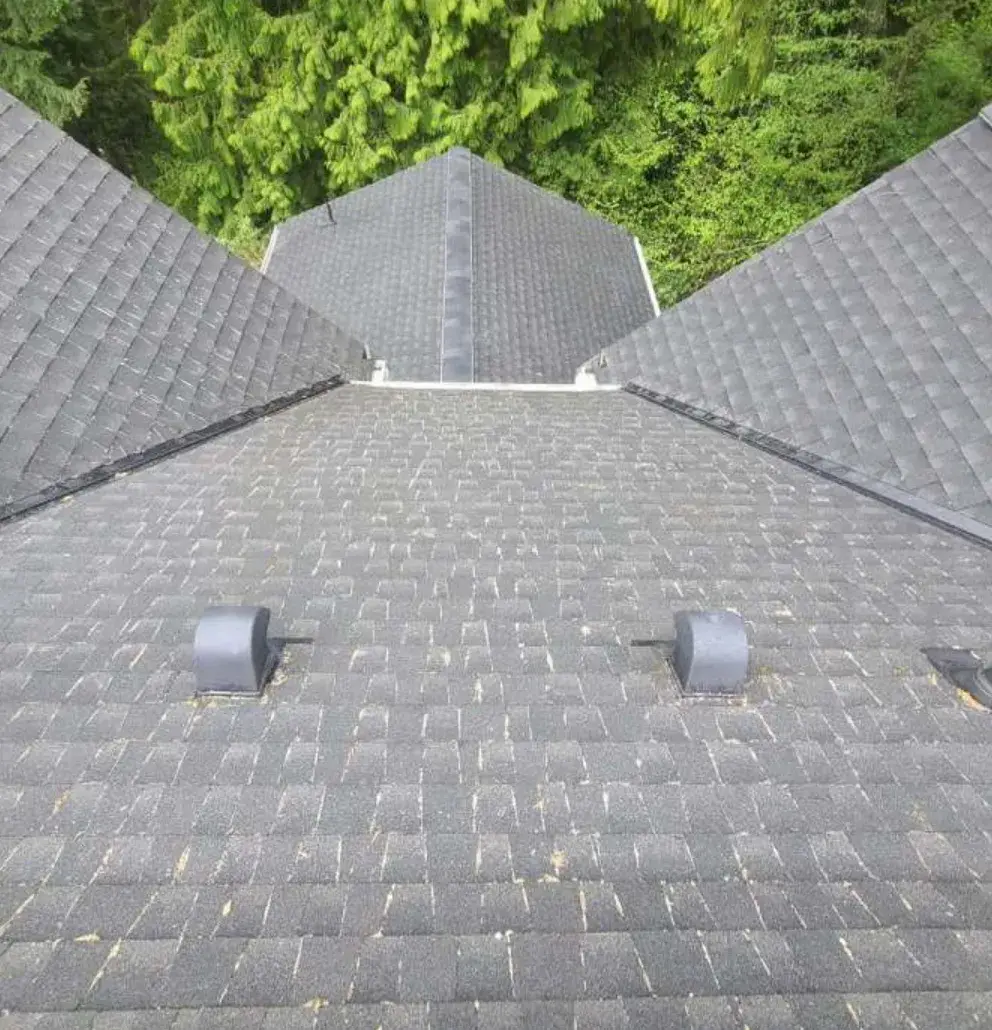
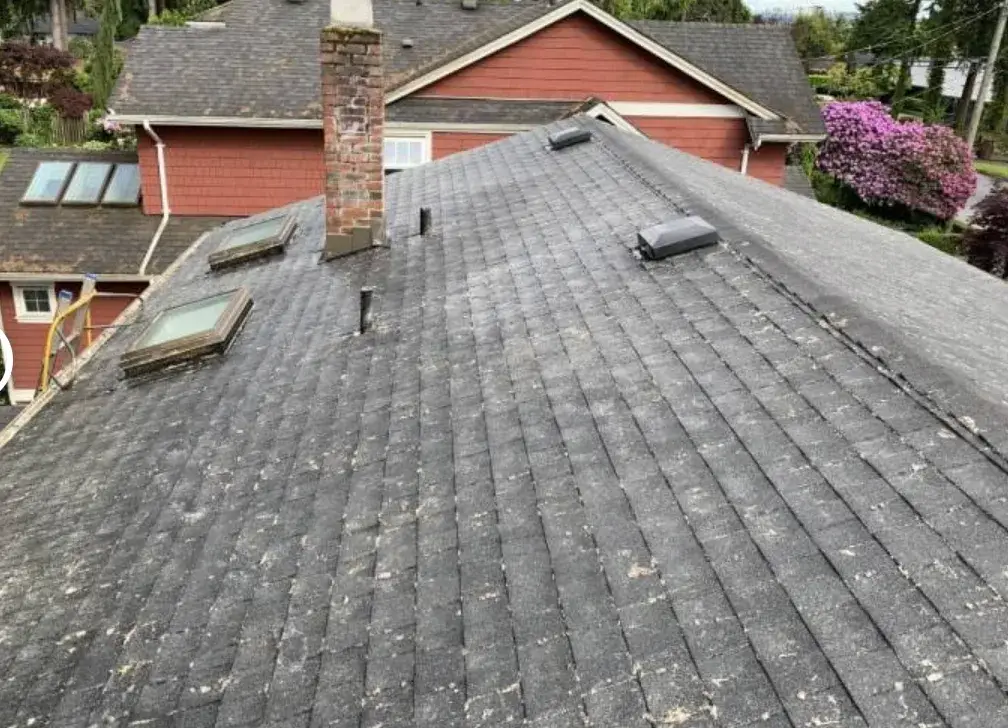
After the moss is off
Before we leave, we tell you which slopes were worst, what we saw at the screws, laps and flashings, and anything cracked or out of place. Moss does come back on tile and steel, more slowly on steel than on tile, and a moss treatment afterward can slow it down. If streaks and lichen across the whole roof are the bigger issue, our roof cleaning page covers that job, and roof demossing explains how a full day on the roof runs. For shingles or shakes, see asphalt shingle roofs and cedar shake roofs. A quote request that names the roof material and lists any outbuildings lets us bring the right ladders and tools on the first visit.
Why choose us
Why choose us for tile & metal roofs
Route first, feet second
Every tile roof gets a walking route before anyone climbs. Some stretches we never stand on at all.
Paint stays on the steel
Plastic scrapers and soft brushes only. A scratch in a coated panel is where rust gets its start.
Straight with you about damage
If a tile was cracked before we arrived, we tell you. If we crack one, we tell you that as well.
Insured and WCB-registered
Our crew is insured and registered with WCB. If part of the job is not right, we come back and make it right.
Got questions?
Questions about tile and steel roofs
Is it worth clearing moss off a steel shop or barn roof?
Usually, yes. A shop or barn under tall firs often carries more growth than the house beside it, because nobody looks at it. The moss itself does not lift steel, but the wet mat it builds around screw heads and at the panel laps works on the washers and the coating year after year.
Tell us about every building when you ask for a quote. We price each one on its own, so you can choose which to do.
Why not just pressure wash a tile roof?
Because a hard jet does two kinds of harm on tile. It drives water up and under the laps, where the roof is built to keep water out, and it wears away the surface of older concrete tile, which leaves it rougher and quicker to grow moss again.
On roofs we use a low-pressure soft wash. Higher pressure is kept for jobs that need it, such as concrete driveways and walkways.
Can a tile roof be cleaned without anyone walking on it?
Partly. A good share of a tile roof can be reached from ladders at the eaves and the gable ends, using long-handled tools. On clay tile we lean on that approach as much as the roof allows.
Some roofs are too wide or too steep to do entirely from the edge. If that is the case, we explain at the quote which sections need footing and how we plan to place it.
The patches on my roof are flat, crusty and pale green. What are they?
That is lichen. Moss is soft, raised and spongy and holds water like a sponge. Lichen sits flat, grips hard and grows very slowly. Open, sunny roofs often carry more lichen than moss.
Lichen does not brush away cleanly. We apply a treatment and it loosens over the following months, which spares the paint or tile surface underneath.
Does moss come back faster on tile than on steel?
In our experience, yes. Weathered concrete tile holds damp in its surface, so spores have somewhere to settle. Smooth steel sheds water quickly and tends to regrow more slowly, mostly where debris collects. Shade from nearby trees matters more than either material.
Moss grows back on every roof in time. A treatment after cleaning slows it down; it does not stop it.
Will you fix the cracked tiles or loose screws you find?
Our work is the moss. Anything we find that needs a roofer, we point out to you with its location on the roof, so you can decide who repairs it and when.
Tile & Metal Roofs in Parksville and Oceanside
Tell us the address and we will get you a price.