
Asphalt shingle
Asphalt Shingle Moss Removal in Parksville and Oceanside
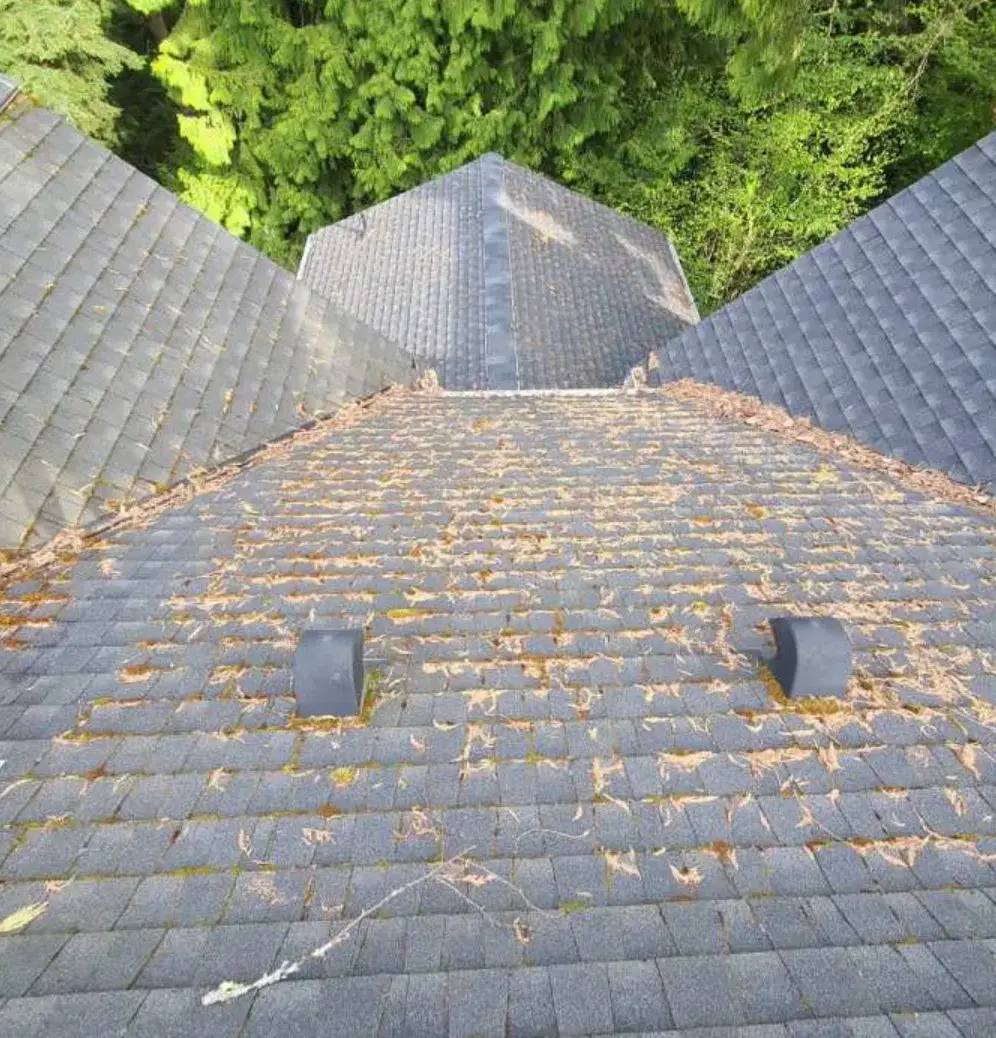
More of the roofs we clear in Oceanside are asphalt than anything else. We work the moss off by hand, downhill with the overlap, and photograph anything that needs a roofer.
Customer reviews
What customers say
The service provided by the owners of the company and the staff were beyond exceptional. The price was also very exceptable and affordable.
Amazing! Sent in a request form on their website in the morning, heard back that afternoon, and booked for the next day. Very fast, reliable, and efficient.
They are efficient, hardworking, and reliable. I’ll definitely call them again for other services. Highly recommended!
Why us
Why customers love our service
And why you will get the best moss removal service in Parksville!
Fast and efficient moss removal
We arrive on the agreed day, finish every slope we quoted for, and leave the yard as tidy as we found it.
Clear and quick communication
Calls and texts get answered, the price is settled before work begins, and afterwards we tell you how the roof looked.
Five-star reviews
Homeowners rate our crew five stars, review after review.
Clearing moss since 2021
Five years on Oceanside roofs of every kind: asphalt, cedar, tile and metal, plus the paving beneath them.
- A walk round the house first, looking at each slope from the ground
- Hand clearing of every slope, worked from the ridge toward the eave
- Slots between three-tab tongues and the butt edge of each course picked clean
- Valleys, chimney backs and skylight curbs cleared of needles and moss
- Moss swept off the lawn and beds, cleared from the trough and taken away
- A treatment on the leftover root film if you choose one, and photos of anything we noticed
Before and after
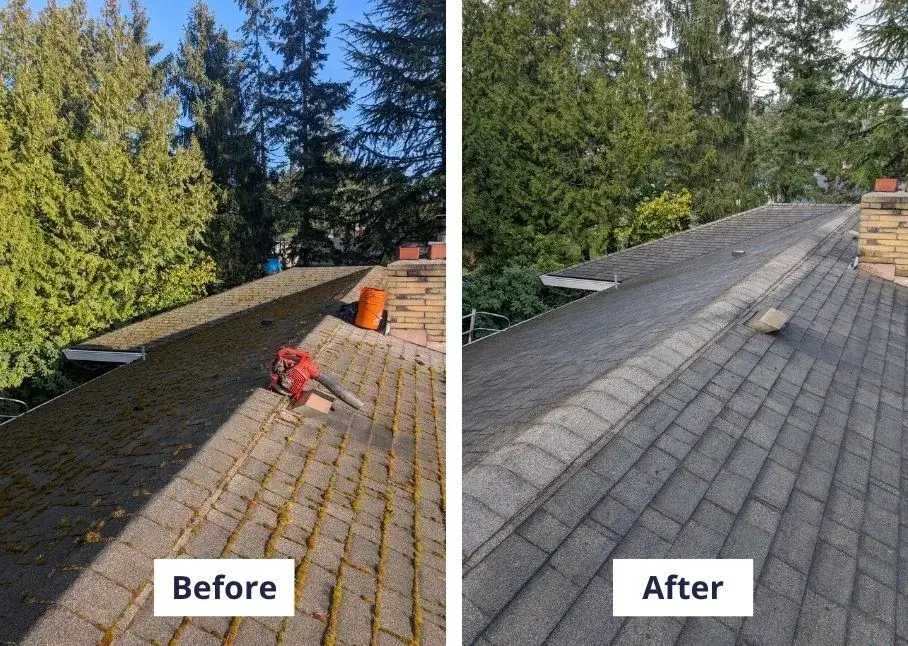
One roof, before and after
Both photos in a set come from the same position, taken as we arrive and again once the moss and debris have been cleared away.
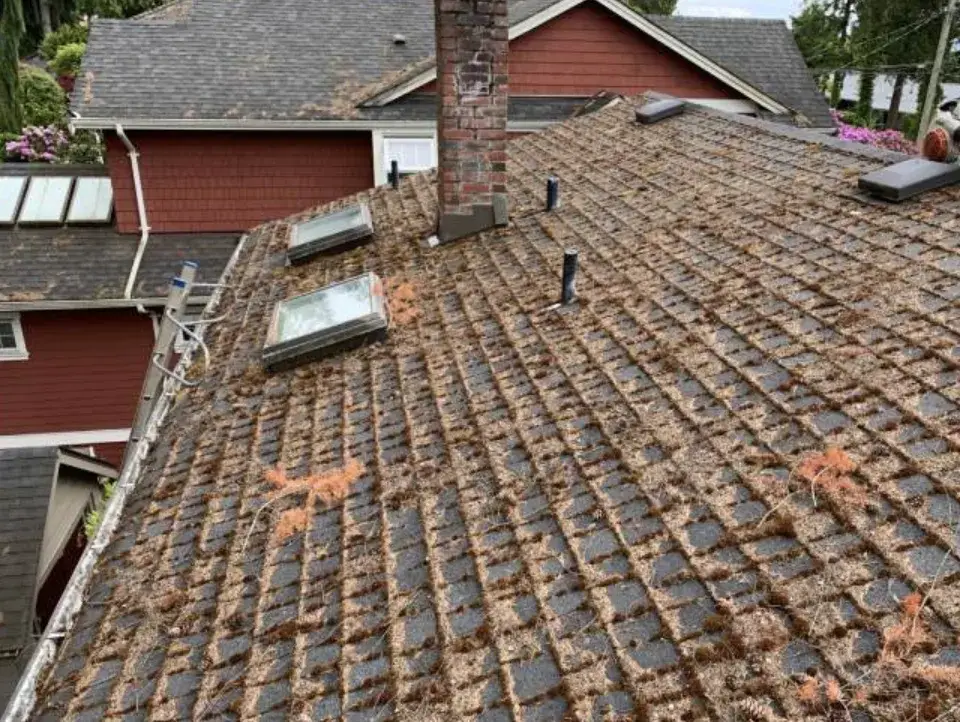
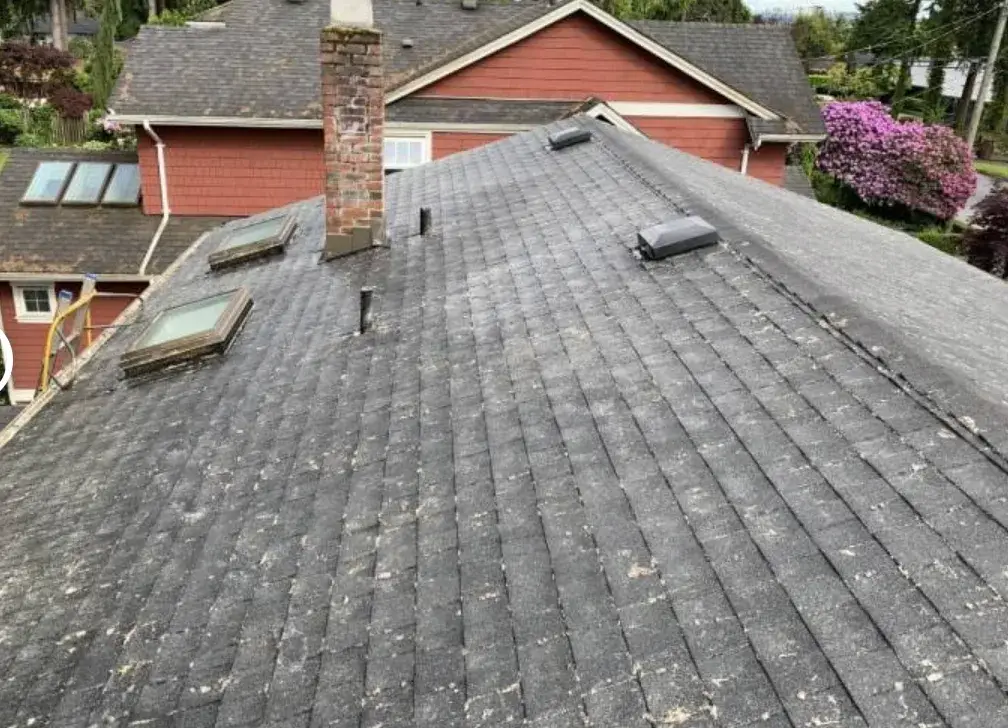
More of the roofs we clear across Oceanside are asphalt shingle than any other covering, from houses near the beach in Parksville and French Creek to the treed acreages around Errington and Coombs. This page deals with that one material: what to look for from the yard, where moss settles on the two common shingle styles, and how we handle the surface while it comes off. Why moss needs to come off a roof at all is covered on our main roof moss removal page, and the order of a working day is set out under roof demossing.
Three checks you can make from the driveway
You do not need to climb anything to decide whether your roof needs us. Stand back far enough to see the whole slope and look for three things.
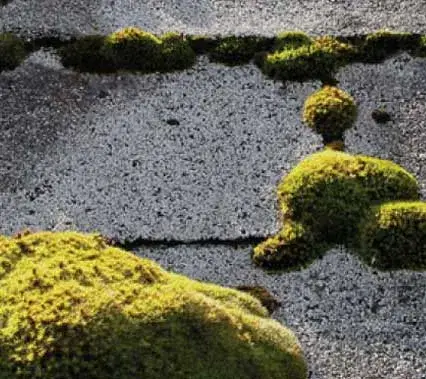
Colour that does not belong. Raised green or rusty brown cushions, usually heaviest on the slope that gets the least sun or sits under a tree. In a dry summer they turn brown and look dead. They are not. Moss dries out and waits, and the first fall rains bring it back to green.
A course line that wobbles. The bottom edge of each row of shingles should run dead straight. Where moss has worked in underneath, edges stand up and throw a thin shadow, and the line looks ragged.
Grit at the bottom of the downspout. Dark, sand-like granules collecting where the downspout empties, or in the trough itself, are the coating coming off the shingles. Some shedding is normal on any roof. A lot of it, on a roof that is not old, often lines up with heavy moss.
If you see any of these, a couple of photos taken from the ground are usually enough for a first opinion. Send them through our contact page.
Why it grows where it does here
Oceanside gets most of its rain in the wet months, and that is when moss on a roof fattens up and spreads. The dry summer stalls it but does not clear it.
Trees decide the rest. Douglas fir and western red cedar shade the roof and drop needles that pile up behind chimneys, along skylight curbs and down the valleys, where they hold water against the shingles for weeks. Bigleaf maple adds a load of leaves in fall, and arbutus adds its own in summer.
The shaded lots inland, west of Parksville toward Mount Arrowsmith, tend to carry thicker growth than open waterfront roofs facing the Strait of Georgia, which dry faster in the wind. That is a tendency, not a rule. One slope behind a tall hedge in Parksville can be as green as anything in Hilliers.
Three-tab or architectural: where we look first
Three-tab shingles are the flat, single-layer kind with a slot every foot or so, which splits each strip into tongues. Moss packs into those slots first, then spreads sideways under the tongues on either side. On an older three-tab roof the tongues may already be curling at the corners, and those get the lightest touch of all.
Architectural shingles, also called laminated or dimensional, have two layers glued together in an uneven pattern. There are no slots, so moss lodges along the thick bottom edge of each course and in the low spots of the pattern, where it is easy to miss from below. Clearing it means working each course edge in turn rather than sweeping the face.
How it works
How Booking Your Roof Works
Four steps, and only the first one needs anything from you. Describe the roof, approve the price, and stay on solid ground while we work.
Describe the roof
Two minutes on the phone or the form.
The address, how many storeys, the roofing material if you know it, and roughly how green it looks from the yard. Mention any big trees nearby.
Approve the price
Every quote is worked out for one roof.
Steepness, height, material, the depth of the moss and how we reach each slope set the figure. It is free, and you have it in hand before any work begins.
The moss comes off
Our crew handles the climbing.
Scrapers and brushes take the moss off the courses, a treatment goes on if it will help, and the bagged moss leaves in our truck. If washing is needed, it is a low-pressure soft wash; asphalt shingles and cedar shakes never see high pressure.
Hear what we saw
Nothing up there stays a mystery.
A curled tab, a split shake, bare patches where granules have gone, or flashing pulling loose: we tell you where it is, and the next step is up to you.
Done.
- You describe the roof.
- You approve a free quote.
- We clear the moss.
- The ladder stays in our truck, not your garage.
Want the green gone from your roof? Ask for a free quote and leave the climbing to our crew.
How we handle the shingle itself
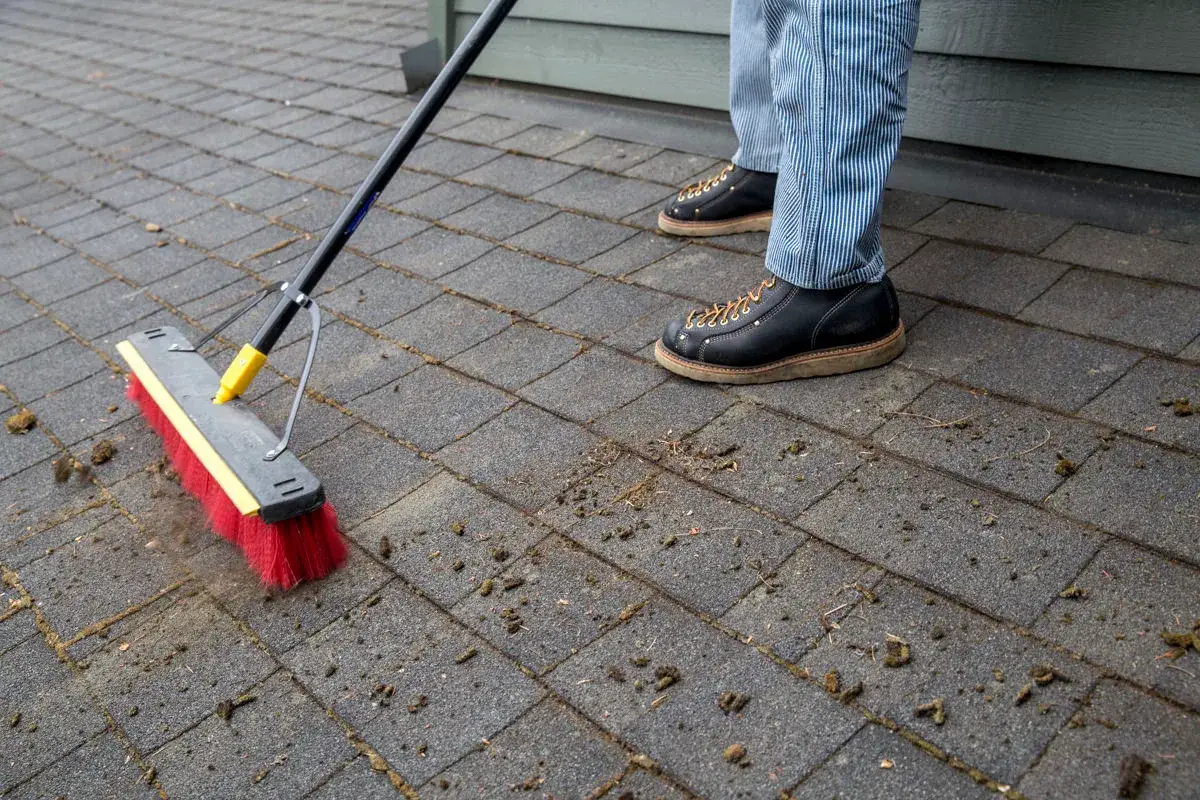
The coated face of an asphalt shingle is its protection from the sun, so the tools are chosen to leave it on. Moss is lifted with plastic scrapers and soft-bristle brushes, always pulled downhill with the overlap. Nothing is pushed up under a course, because that is the direction water should never be sent. Wire brushes and metal blades stay in the truck.
High pressure never goes near a shingle roof. Where black algae streaks are part of the job, a low-pressure soft wash deals with them, described on our roof cleaning page.
Temperature matters too. A cold shingle cracks if it is bent, and a shingle on a hot afternoon goes soft enough to scuff. On a given day we start on whichever slope has warmed through and leave any face that is softening in the sun until later or for another visit.
The work
On the job
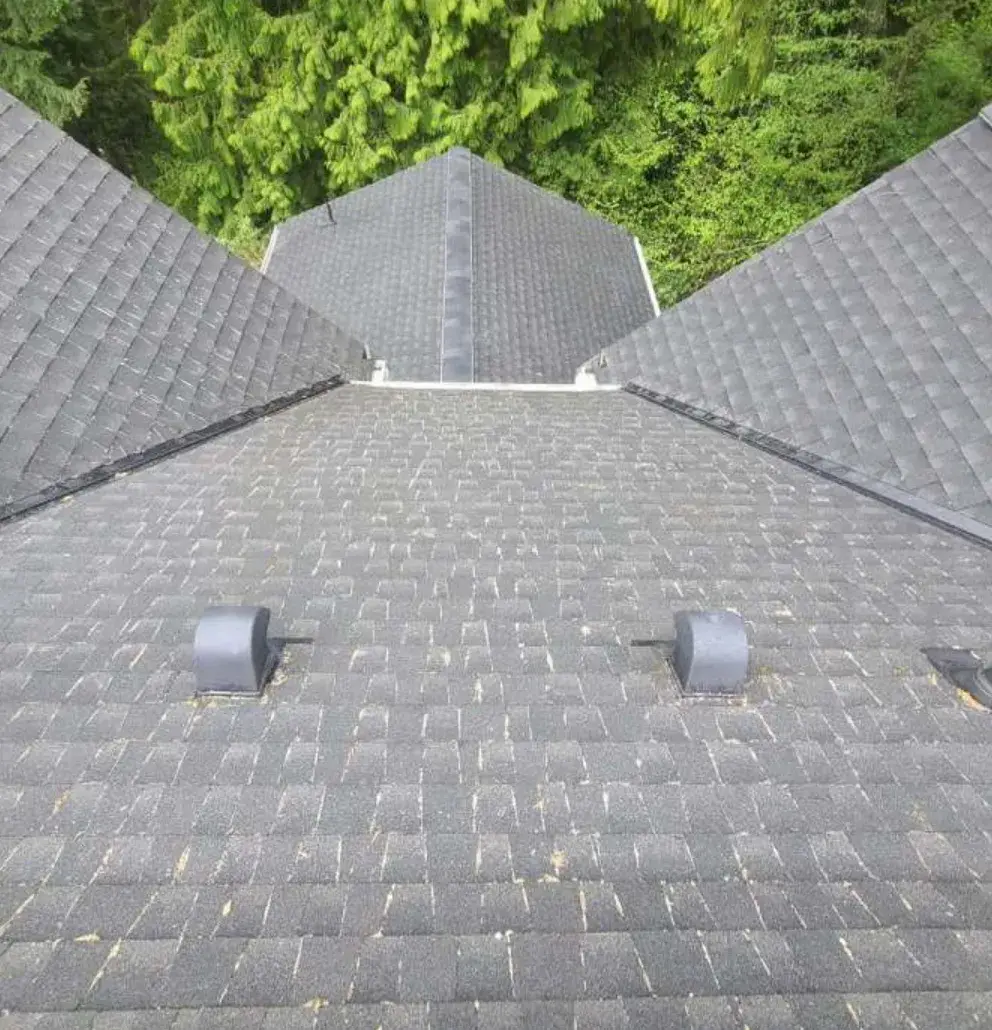
After the moss is off
Do not expect a roof that looks brand new. Where a thick cushion sat you may see a lighter patch, and a faint brown film of root often stays in the surface. If you choose a treatment and the weather allows, that film is treated; either way it weathers away over the next stretches of rain. Scrubbing it all off on the day would cost more coating than it is worth.
You also get photos. Any tab still standing up, any cracked shingle, any gap at a vent or along flashing is pictured and noted. We do not do roof repairs, so you decide what to do with that.
Slowing the next round
Moss will come back on any roof in this climate. What changes is how fast. Trimming branches that hang over the roof, keeping valleys free of needles, and a treatment program on the shadiest slopes all help. Our moss treatment and prevention page covers the options. Shaded roofs need looking at more often than open ones.
Got cedar or tile instead? See cedar shake roofs or tile and metal roofs. Every job is done by our insured, WCB-registered crew, and quotes are free.
Why choose us
Why choose us for asphalt shingle roofs
Hand tools only on the shingle
Nothing harder than a plastic scraper touches the coated surface, and nothing is pushed uphill under a course.
You see what we saw
Every slope is photographed, so the parts of the roof you cannot see from the yard are not a mystery afterwards.
Booked around the weather
We move a booking rather than work a wet or frozen asphalt roof, and we tell you as soon as the forecast turns.
Insured, WCB-registered, guaranteed
Our cover is in place on every roof we climb. If a slope is not right after we leave, we come back and make it right.
Got questions?
Questions about moss on asphalt roofs
Can I just spray a moss killer and let the rain wash it off?
A spray kills the green, but the dead cushion stays on the roof for a long time. It keeps soaking up rain and it stays wedged under the tab edges it has already lifted, so the shingle gets most of the harm without the moss being alive.
On a roof with real growth we take the bulk off by hand first, then, if you want a treatment and the weather allows, treat the thin film that is left. A roof with only a light speckle may need treatment alone, and we will say so. More on that choice is on our moss treatment and prevention page.
What time of year should I book moss removal on an asphalt roof?
Any dry spell works, so long as the shingles are not frozen or baking. Many Oceanside owners notice the moss in spring, after the wet months have fattened it up, and that is a good time to have it off before it dries and crumbles into the trough over summer.
Early fall is the other common window: the roof goes into the rainy season clear, and the next round of growth starts from almost nothing.
What happens if it rains on the day you are booked?
We move the job. Wet moss on asphalt is slippery underfoot, and soaked roots smear across the surface instead of lifting cleanly.
We keep an eye on the forecast in the days before and call you as early as we can with a new date.
Do you need to come inside the house?
No. All of the work happens on the roof and around the outside of the house. We need a clear spot to stand a ladder, access through any side gate, and a heads-up about dogs or anything fragile under the eaves.
You do not have to be home, though many people like to walk round with us at the start.
Where does all the moss go once it is off the roof?
We work it down the slope toward the eave and gather it there, so most of it never reaches the ground. What does fall is raked off your lawn, paths and garden beds. Moss that lands in the gutter trough is scooped out before we leave.
It is all bagged and goes away with us.
Can I see what you found up there?
Yes. We photograph each slope before and after, plus close-ups of anything worth a second look: tabs that have stayed raised, cracked or missing shingles, a gap at a vent boot or along flashing.
We are not roofers and do not sell repairs, so the photos come with a plain note of what we saw and whether it is worth asking a roofer about.
Asphalt Shingle Roofs in Parksville and Oceanside
Tell us the address and we will get you a price.