
From a green film to a thick mat
Roof Moss Removal in Parksville, Stage by Stage
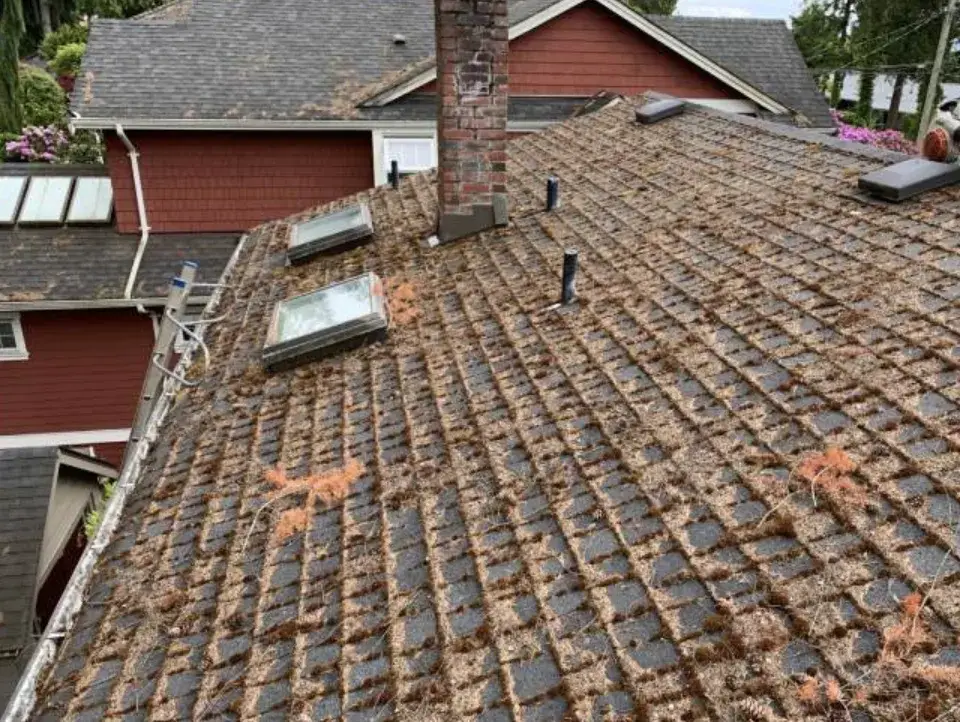
Roof moss goes through four stages, from a faint film to a mat that lifts the shingles. We lift it off by hand at every stage, and high pressure never touches the roof.
Customer reviews
What customers say
Great experience working with this company! Quick turn around time and very professional. I’ll definitely be using their services again in the future.
Great job and fair pricing! Will hire again!
The service provided by the owners of the company and the staff were beyond exceptional. The price was also very exceptable and affordable.
Why us
Why customers love our service
And why you will get the best moss removal service in Parksville!
Fast and efficient moss removal
We arrive on the agreed day, finish every slope we quoted for, and leave the yard as tidy as we found it.
Clear and quick communication
Calls and texts get answered, the price is settled before work begins, and afterwards we tell you how the roof looked.
Five-star reviews
Homeowners rate our crew five stars, review after review.
Clearing moss since 2021
Five years on Oceanside roofs of every kind: asphalt, cedar, tile and metal, plus the paving beneath them.
- A read on which stage your roof is at, given when we quote
- Every slope checked, including the ones hidden from the street
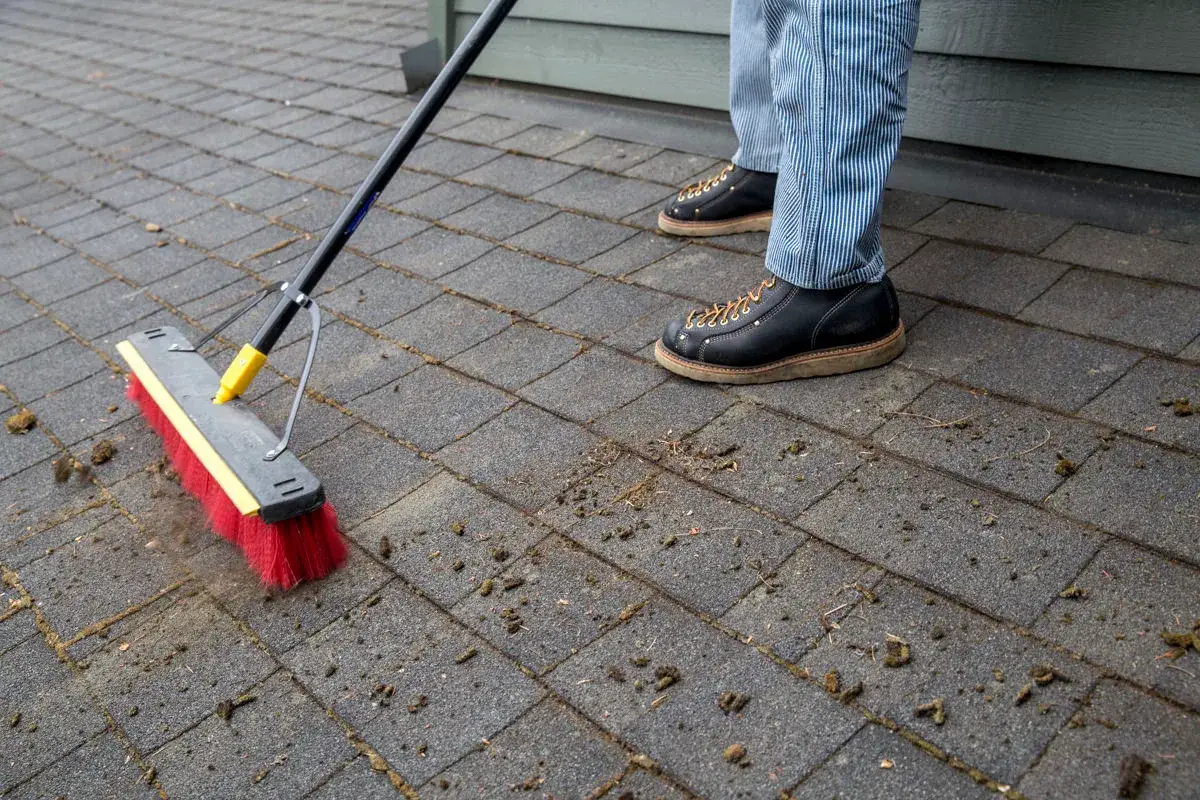
- Moss lifted by hand, working downhill in the direction the roof sheds water
- Extra time spent in the valleys and on the rows just above the eaves
- Clumps that slid into the eavestrough lifted out and bagged with the rest
- Lifted or cracked pieces shown to you, with a note on where a roofer should look
- Fallen moss raked off the lawn and beds and taken away
Before and after
One roof, before and after
Both photos in a set come from the same position, taken as we arrive and again once the moss and debris have been cleared away.
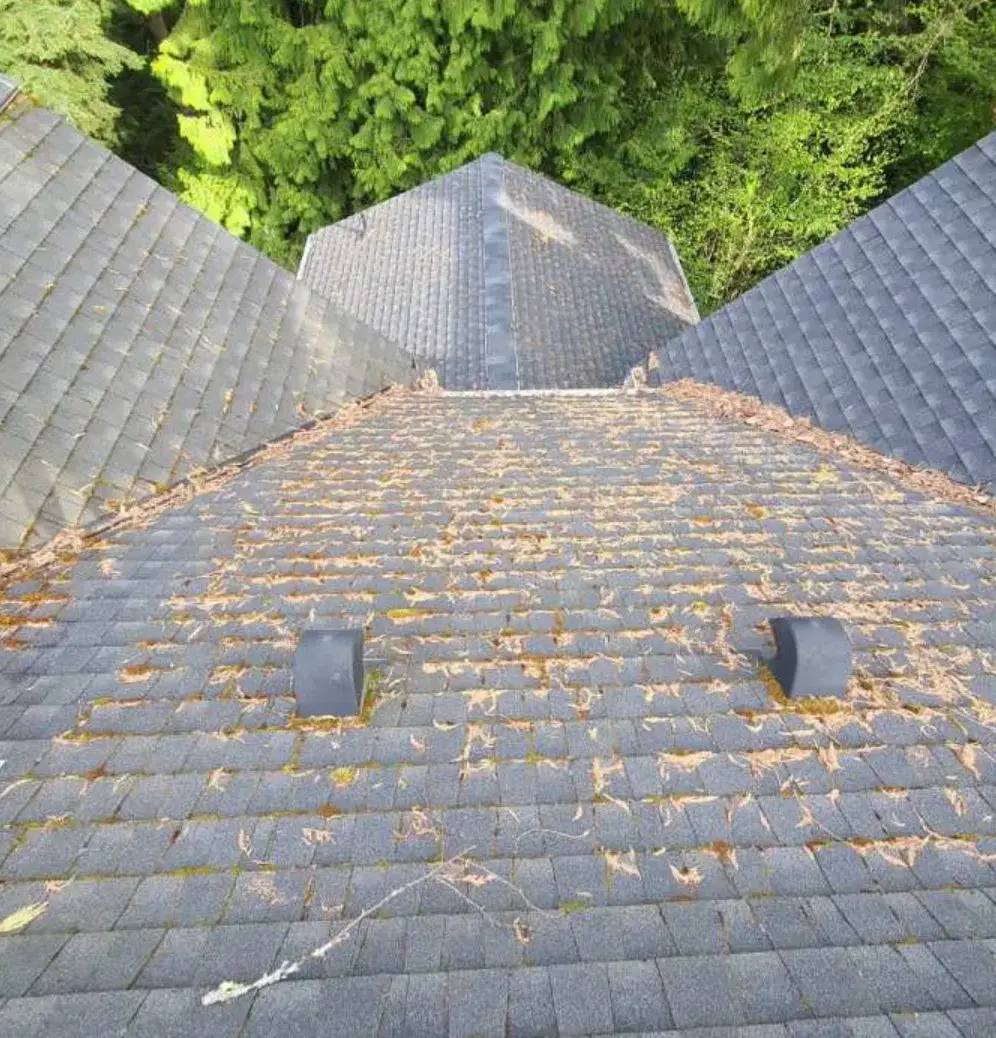
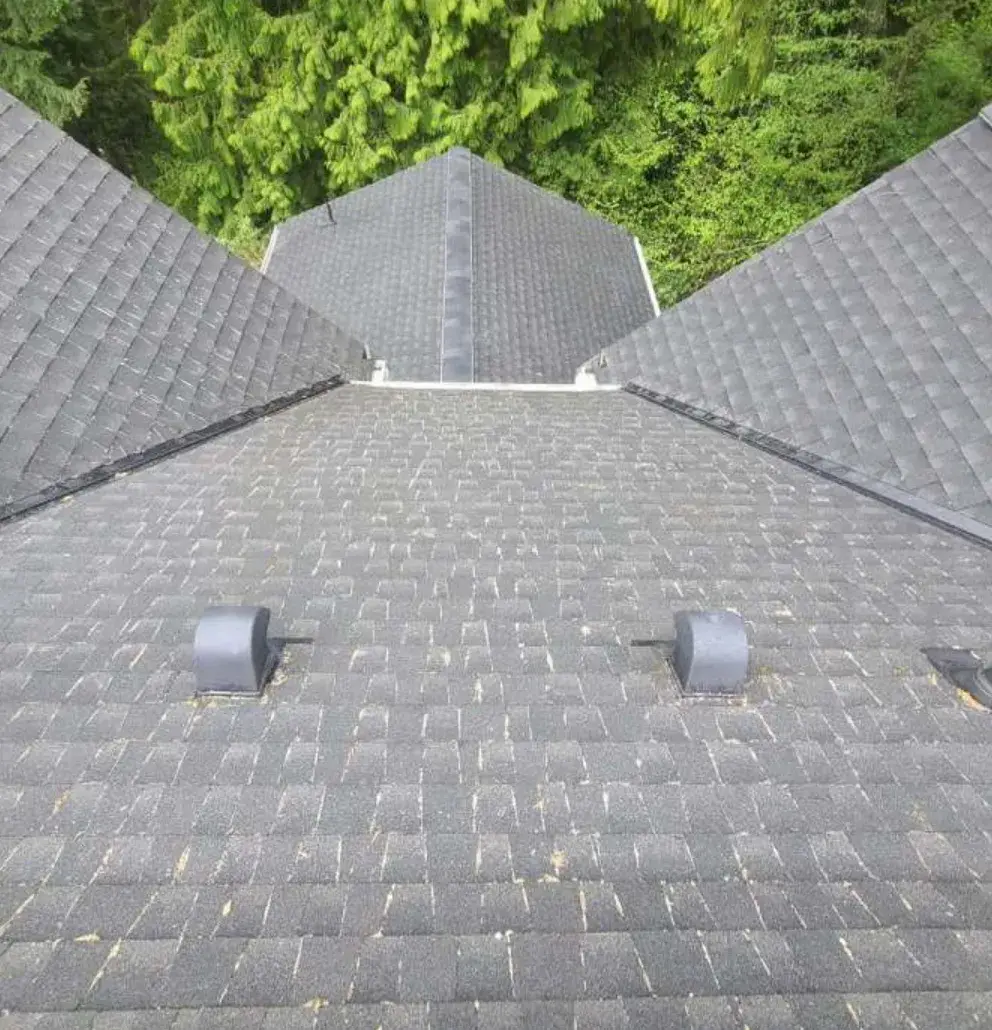
Drive along almost any street in Parksville and you can pick out the roofs with moss on them, but not how far along each one is. A faint green tint on a north slope and a roof whose bottom rows have curled up under a heavy mat both count as “moss on the roof”, yet they call for very different conversations. Here we sort roof moss into the four stages we find on Oceanside houses: what each looks like from your lawn, and what taking it off involves at that point.
Two houses on one street, two different roofs
Neighbours are often surprised that their roof is green while the one next door looks clean. The difference is nearly always sun, wind and trees rather than age or upkeep. A house on an open lot facing the Strait of Georgia gets plenty of light and a steady breeze, so its roof dries soon after a shower. A house a short walk back from the water, under Douglas fir or western red cedar, may barely see direct sun on its north pitch from October to April, the months that bring most of the year’s rain.
Inland the gap widens. Acreages around Errington often have tall timber standing close to the house, so shade lasts most of the day, and an arbutus near the eaves adds damp litter even in the dry months.
Stage one: a thin green film
From the ground it is a faint green or olive tint, usually on the north-facing slope or the strip under an overhanging branch. Up close it is a velvety layer a few millimetres deep.
The shingles are still lying flat and shedding water normally. It is the quickest stage to clear, and on many roofs a careful brush-down and a controlled treatment are the whole job.
Stage two: tufts along the edges
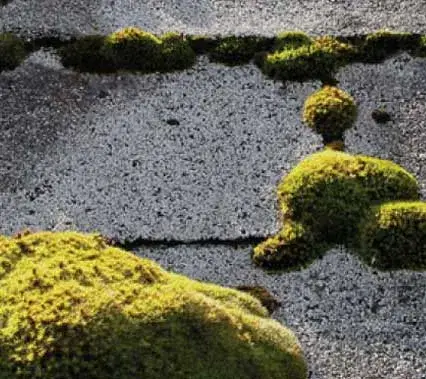
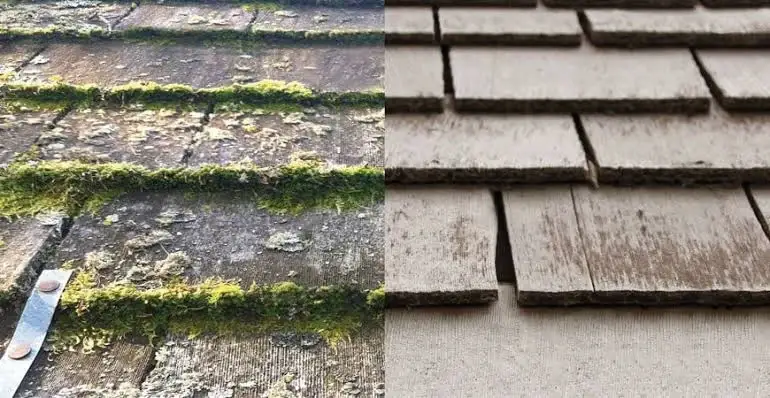
Small rounded clumps appear, often lined up along the bottom edge of every course like a row of green beads. They turn brown and crisp in a dry July and go green again with the first autumn rain.
The moss has found the joint where one row overlaps the next, which is where it grips best. The clumps still come away cleanly by hand, but their roots are starting to work into the shingle surface. Most roofs we quote in Parksville and Qualicum Beach sit somewhere between this stage and the next.
Stage three: a continuous cushion
The tufts have joined into a soft, spongy layer over whole sections of a slope, thickest in the valleys and on the lowest rows above the eaves. Fir needles and maple leaves catch in it and rot where they land.
Now the roof stays wet for days after rain instead of hours, which keeps the shingles damp, gives fresh spores a bed, and sends clumps sliding into the eavestrough whenever it pours. We work in sections, top to bottom, so the cushion is eased off rather than torn.
Stage four: edges lifting off the roof
Look for shingle edges that seem thick or turned up under the growth, a wavy line where the courses should run straight, and grit gathering where a downspout empties. On cedar, the butt ends look dark and feel soft.
The growth has pushed under the overlap and raised it. Wind can catch a lifted edge and sideways rain can get behind it, and on a cold night the water held in that gap freezes, swells and opens it a little more. We still clear it by hand, just more slowly, checking what lies underneath as we go.
The covering changes the details
Asphalt shingle, cedar shake, concrete tile and metal each hold moss in different places and take weight differently, so the same stage makes a different job on each. The pages below cover each one, plus the larger roofs on strata complexes and commercial buildings.
By roof type
Roof Moss Removal by roof type
Each roofing material takes moss differently and needs its own handling. Choose yours for the details.
Asphalt Shingle Roofs
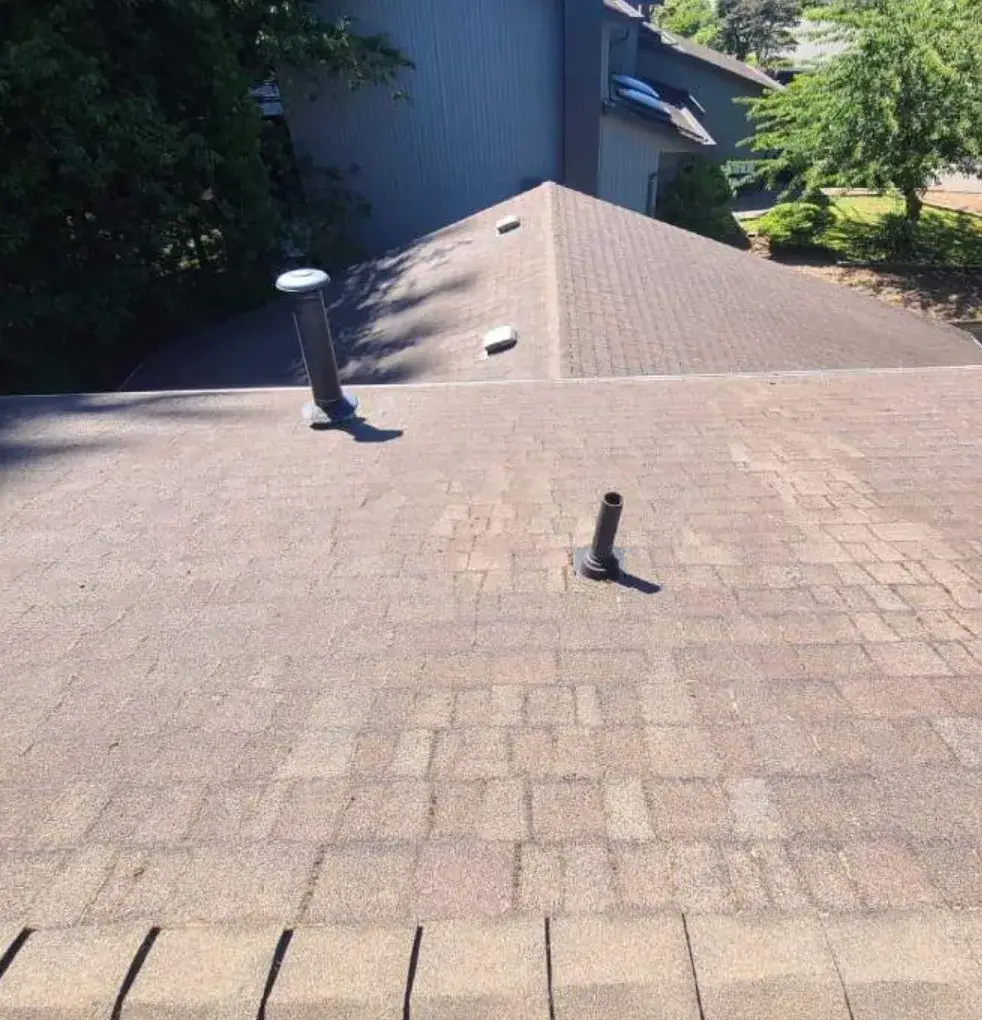
More of the roofs we clear in Oceanside are asphalt than anything else. We work the moss off by hand, downhill with the overlap, and photograph anything that needs a roofer.
Read more →Cedar Shake Roofs
A shake roof wants to dry out between rains, and moss stops it. We pick the growth out by hand, keep high pressure off the wood, and tell you plainly what shape the shakes are in.
Read more →Tile & Metal Roofs
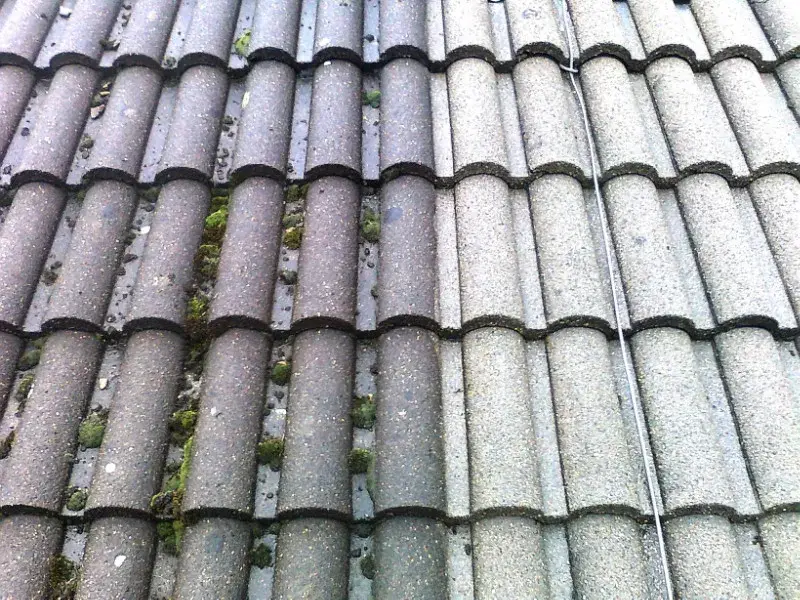
Tile and steel roofs outlast the moss on them. The small parts do not: laps, screw washers, ridge caps and paint. That is where our time on these roofs goes.
Read more →Commercial & Strata Roofs
For strata councils, property managers and business owners around Parksville and Qualicum Beach: every roof on the site cleared, planned around the people who live and work below.
Read more →Why the method stays the same at every stage
At stage three or four, a pressure washer can look like the fast answer. On a roof it is the wrong one. Asphalt shingles rely on their mineral granules to shield them from the sun; a high-pressure jet strips those granules, the shingles age early, and the grit shows up in your downspouts. The same jet forces water up under the laps, the one direction a roof is not built to handle, and on cedar it shreds the soft outer fibres and drives water deep into the wood.
Any washing we do starts as a low-pressure soft wash. Higher pressure comes out only for work that calls for it, like the concrete on a driveway or front walk, which has its own driveway and sidewalk page. High pressure never goes on asphalt shingles or cedar shakes. On the roof that means plastic scrapers, soft brushes and hands, working downhill in the direction the courses overlap. If what bothers you is black streaking or crusted lichen rather than moss, see roof cleaning.
How it works
How Booking Your Roof Works
Four steps, and only the first one needs anything from you. Describe the roof, approve the price, and stay on solid ground while we work.
Describe the roof
Two minutes on the phone or the form.
The address, how many storeys, the roofing material if you know it, and roughly how green it looks from the yard. Mention any big trees nearby.
Approve the price
Every quote is worked out for one roof.
Steepness, height, material, the depth of the moss and how we reach each slope set the figure. It is free, and you have it in hand before any work begins.
The moss comes off
Our crew handles the climbing.
Scrapers and brushes take the moss off the courses, a treatment goes on if it will help, and the bagged moss leaves in our truck. If washing is needed, it is a low-pressure soft wash; asphalt shingles and cedar shakes never see high pressure.
Hear what we saw
Nothing up there stays a mystery.
A curled tab, a split shake, bare patches where granules have gone, or flashing pulling loose: we tell you where it is, and the next step is up to you.
Done.
- You describe the roof.
- You approve a free quote.
- We clear the moss.
- The ladder stays in our truck, not your garage.
Want the green gone from your roof? Ask for a free quote and leave the climbing to our crew.
After the roof is clear
Clearing the moss puts a roof back to the start of stage one, not past it. Spores keep arriving on the wind each season, and the shade that grew the first crop will grow another. Slowing that down is the subject of moss treatment and prevention, and how a visit runs from arrival to clean-up is set out under roof demossing.
Asking for a quote
Tell us roughly which stage you think the roof is at, what it is covered with, which trees stand over it, and whether a garage, shed or carport roof needs a look too. A sentence or two is plenty.
Parksville Moss Removal has cleared roof moss since 2021. We are locally owned and operated, insured and WCB-registered, and our guarantee is simple: we come back and make it right. We cover Parksville and the rest of Oceanside, from Nanoose Bay up to Bowser. Send us the address and a short description, and we will book a visit to see it in person.
The work
On the job
Why choose us
Why choose us for roof moss removal
Hand tools on every roof
Plastic scrapers, soft brushes and gloved hands. Nothing metal or wire is dragged across your shingles or shakes.
Five years on Oceanside roofs
We have been clearing roof moss since 2021, from open lots by the water to shaded acreages inland.
Insured and WCB-registered
Working at height is the risky part of this trade. Every visit is covered by insurance and by our WCB registration.
Local, with a guarantee
Parksville Moss Removal is locally owned and operated. If a job of ours falls short, we come back and make it right.
Got questions?
Before you book roof moss removal
Can you look at the roof and tell us whether it needs doing yet?
Yes. The quote is free, and it comes with an honest read on which stage the roof has reached. Sometimes the answer is that a patchy film can wait another season, and if so, that is what we tell you.
We start from the yard and the roof edge, so nobody in the house has to climb a ladder to find out what is up there.
Only the north side of our roof has moss. Do we pay for the whole roof?
No. We quote the slopes that need the work. The sunny faces still get a look while we are up there, because a valley or a corner under a branch can hide growth that is hard to spot from the yard, and anything we find there is pointed out to you.
We have a shop and a woodshed under the trees too. Can those be done on the same visit?
Usually, yes. On treed acreages the outbuildings often carry more moss than the house, because they sit closer to the timber. Mention them when you ask for a quote so we can check the roofing and how to reach it safely. Some older shed roofs are too light to stand on, and we will say so.
Could I scrape the worst of it off myself and save the call?
We would rather you did not. Wet moss on a pitched roof is slippery underfoot, and a metal scraper or a stiff wire brush takes granules off asphalt and splinters cedar. Pulling moss off against the way the shingles overlap can also catch an edge and lift it, which is the damage removal is meant to prevent.
What happens to the moss that has already washed into the eavestroughs?
Clumps that slid off the roof before we arrived, and the ones that drop while we work, are lifted out of the trough and bagged with everything else that came off the roof. None of it is left on the lawn or in the beds.
Is a roof with lifted edges too far gone to be worth clearing?
Not usually. Taking the moss off still lets the roof shed rain properly again and lets the raised edges dry out. Repairing shingles is not our trade, though, so where courses will not lie flat or pieces are cracked, we show you where they are and suggest a roofer takes a look.
Which parts of Oceanside do you work in?
Parksville and the towns around it. Along the shore, that runs from Nanoose Bay through French Creek and Qualicum Beach, then on to Dashwood, Qualicum Bay and Bowser. Inland it takes in Errington, Coombs and Hilliers. Every town listed has a page of its own under Locations.
Roof Moss Removal in Parksville and Oceanside
Tell us the address and we will get you a price.